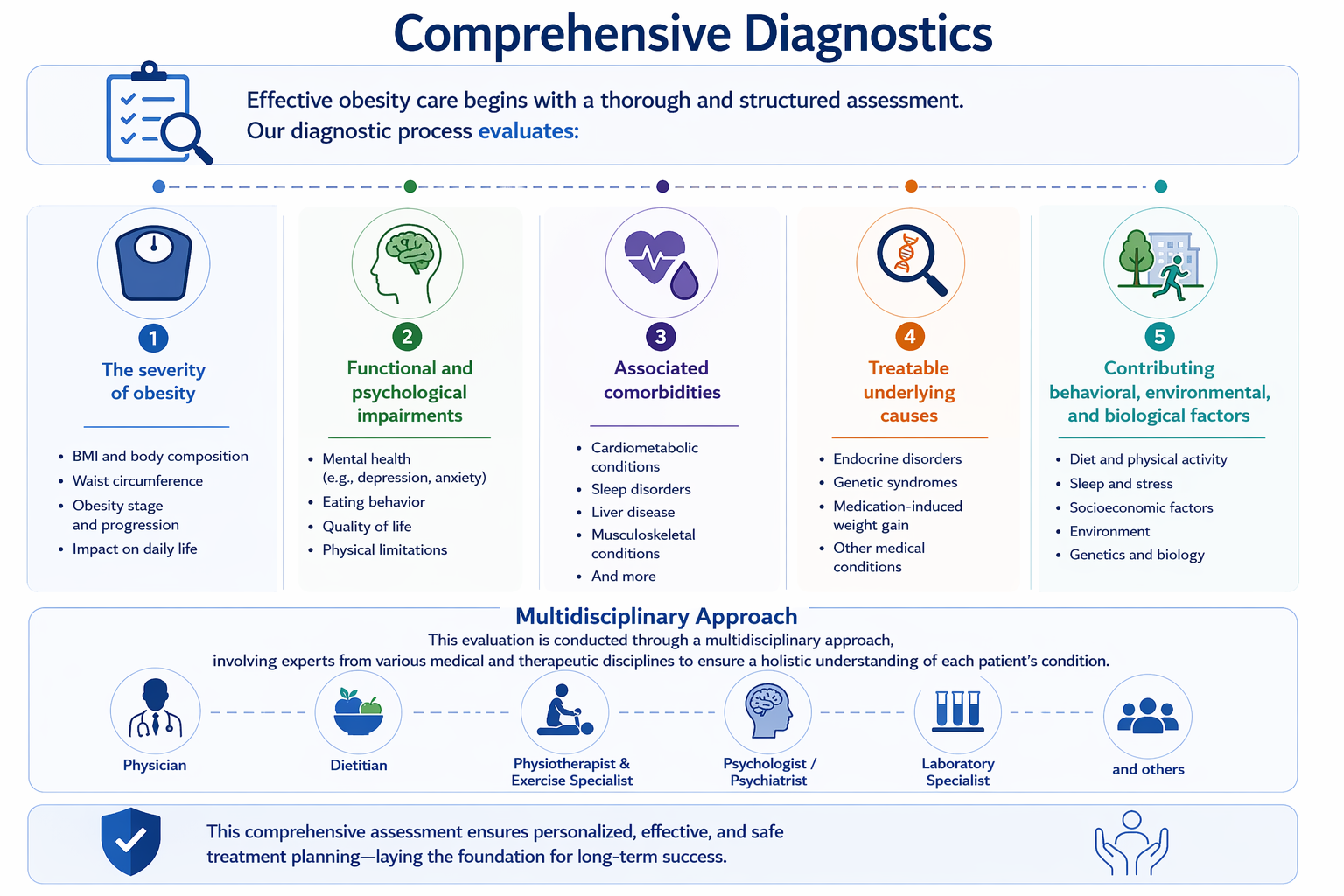
Comprehensive Diagnostics
Effective obesity care begins with a thorough and structured assessment. Our diagnostic process evaluates:
- The severity of obesity
- Functional and psychological impairments
- Associated comorbidities
- Treatable underlying causes
- Contributing behavioral, environmental, and biological factors
This evaluation is conducted through a multidisciplinary approach, involving experts from various medical and therapeutic disciplines to ensure a holistic understanding of each patient’s condition.
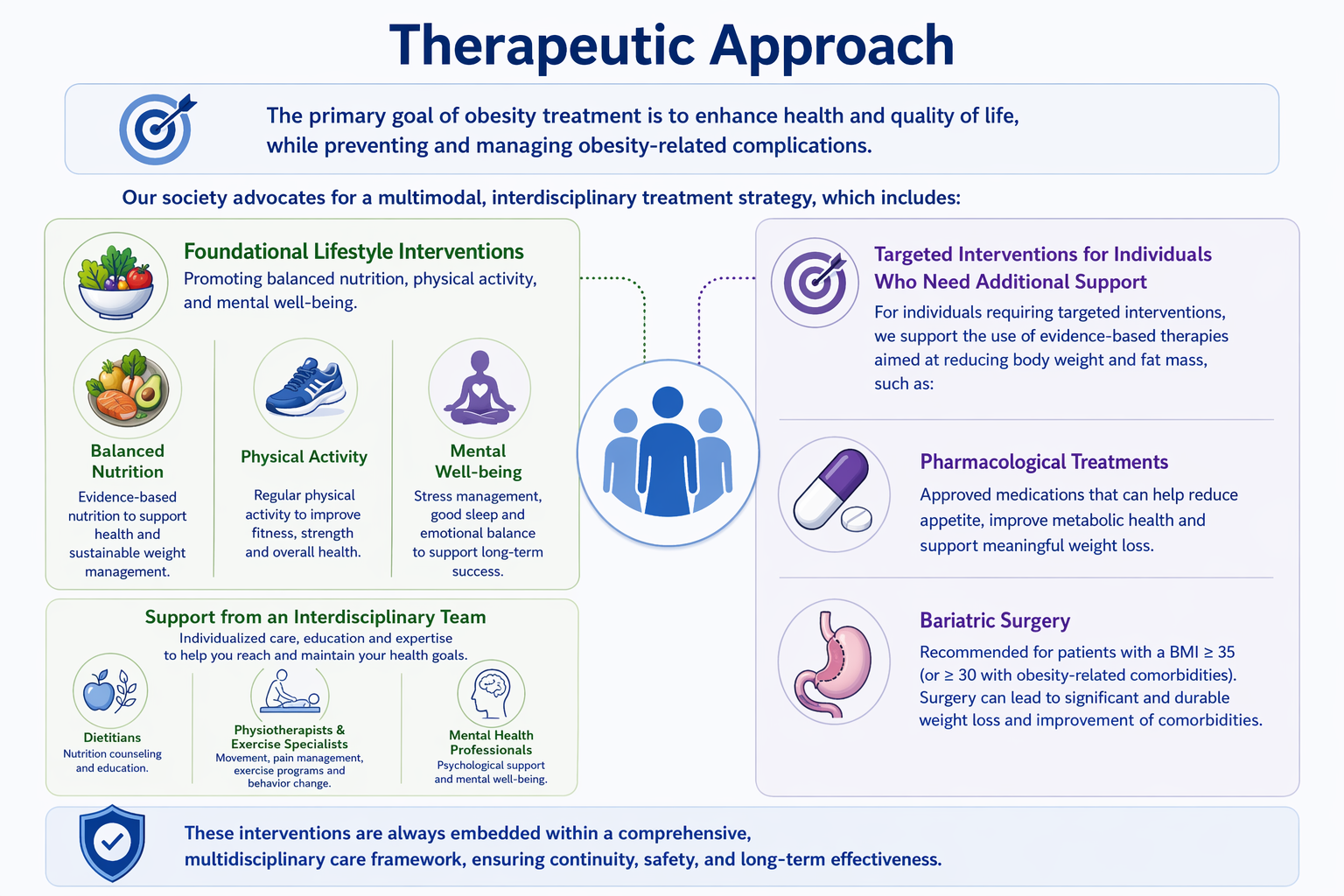
Therapeutic Approach
The primary goal of obesity treatment is to enhance health and quality of life, while preventing and managing obesity-related complications.
Our society advocates for a multimodal, interdisciplinary treatment strategy, which includes:
- Foundational lifestyle interventions: promoting balanced nutrition, physical activity, and mental well-being
- Support from dietitians, physiotherapists, exercise specialists, and mental health professionals
For individuals requiring targeted interventions, we support the use of evidence-based therapies aimed at reducing body weight and fat mass, such as:
- Pharmacological treatments
- Bariatric surgery (recommended for patients with a BMI ≥ 35)
These interventions are always embedded within a comprehensive, multidisciplinary care framework, ensuring continuity, safety, and long-term effectiveness.