Definition
Obesity is a complex, chronic disease characterized by an excessive accumulation of body fat that poses a risk to health. It is commonly defined using the Body Mass Index (BMI), a measure calculated by dividing a person’s weight in kilograms by the square of their height in meters. According to the World Health Organization (WHO), a BMI of 30 or higher is classified as obesity.
However, BMI alone does not capture the full picture. Other important indicators include:
- Waist circumference: A high waist measurement is associated with increased risk for metabolic diseases. In Switzerland, 33% of adults have an elevated waist circumference, with men (35%) slightly more affected than women (31%).
- Body fat percentage: Advanced methods such as bioelectrical impedance or DEXA scans can assess fat mass more precisely, especially in clinical settings.
Epidemiology in Switzerland
Obesity is a growing public health concern in Switzerland. As of 2022:
- 43% of adults are either overweight (BMI ≥ 25) or obese (BMI ≥ 30).
- 12% of adults are classified as obese.
- Among children aged 6–12, 15% are overweight or obese, with 3% falling into the obese category.
These figures reflect a steady increase over the past decades and highlight the need for effective prevention and treatment strategies.
Dysfunctional Fat Tissue and Inflammation
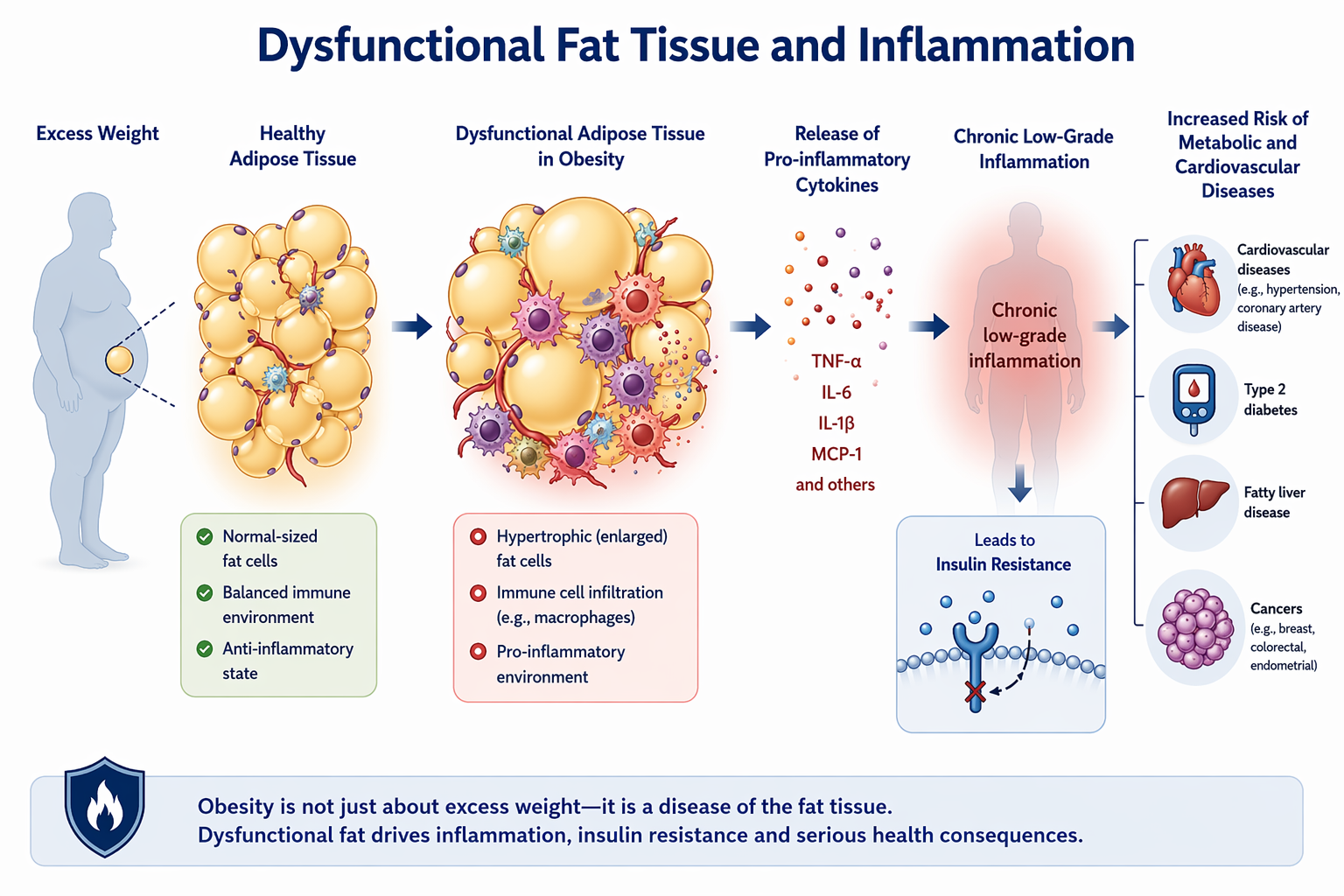
Obesity is not just about excess weight—it involves dysfunctional adipose tissue. In obese individuals, fat cells can become hypertrophic and inflamed, releasing pro-inflammatory cytokines. This chronic low-grade inflammation contributes to insulin resistance and plays a key role in the development of metabolic and cardiovascular diseases as well as certain types of cancer.
Associated Diseases and Comorbidities
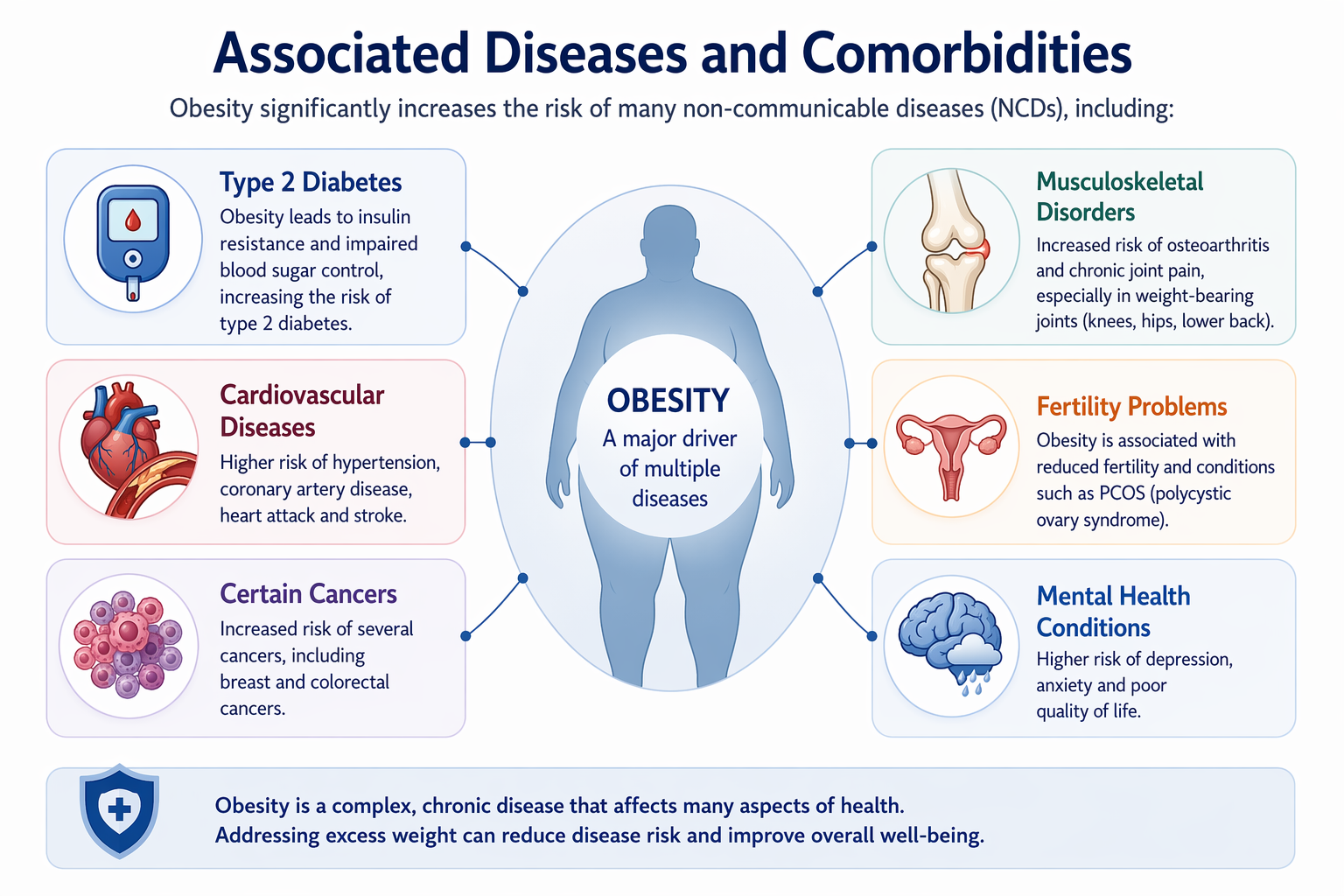
Obesity significantly increases the risk of many non-communicable diseases (NCDs), including:
- Type 2 diabetes
- Cardiovascular diseases (e.g., hypertension, coronary artery disease)
- Certain cancers (e.g., breast, colorectal)
- Musculoskeletal disorders (e.g., osteoarthritis)
- Fertility problem (e.g. PMOS)
- Mental health conditions (e.g., depression, anxiety)
In Switzerland, the economic burden of obesity-related diseases is substantial, with estimated costs reaching CHF 8 billion annually.